MALTA'S INVISIBLE DAUGHTERS
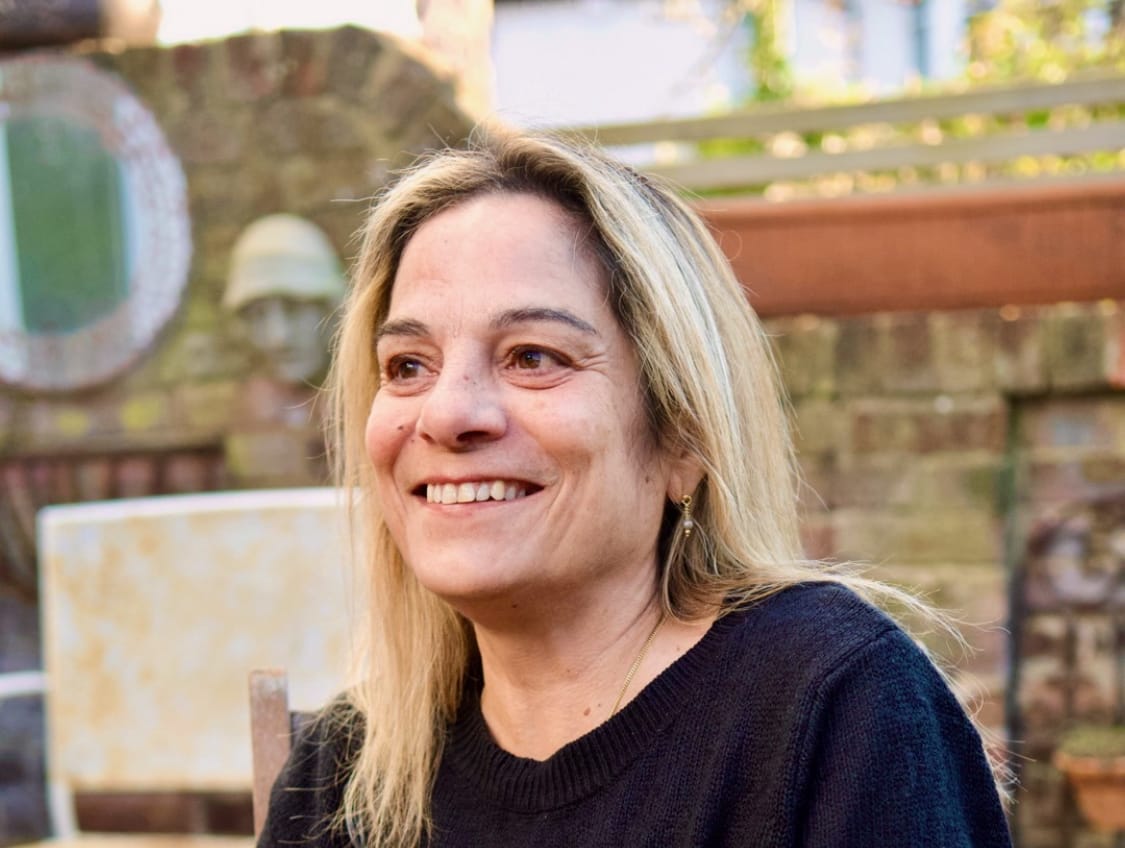
I was born into silence. Not the quiet kind, but the kind built into laws, pulpits and family dinners. Malta didn't need to outlaw women like me. We simply didn't exist.
For decades, I carried something I couldn't name: a kind of absence, a space where identity should have been. I had no reference point. No books, no films, no conversations, no acknowledgment that women like me existed anywhere, ever. The only models of womanhood I saw were: virgin, mother, whore. The holy trinity of female possibility under Catholicism. None of those categories had space for what I was.
So I just felt wrong. Fundamentally wrong. Like there was something broken in me that everyone else was born with intact.
It wasn't until I understood the history that I realised this wrongness had been constructed, deliberately, across generations, and exported wholesale to Malta long before I was born.
When Britain imposed its Penal Code on Malta in 1854, it criminalised same-sex relations between men. Lesbians weren't mentioned. Gay men faced arrests, prosecutions, jail, documented, brutal violence. Lesbians faced something different: total invisibility. Not just legally. We didn't exist in Church teaching, in culture, in possibility.
This pattern repeated across the empire. The same Victorian morality was exported to India, East Africa, the Caribbean, the Pacific. Nearly 70% of countries that still criminalise homosexuality today are former British colonies. And in almost all of them, the laws targeted men. Because colonial law couldn't conceive of female sexuality that didn't involve men. Women existed only in relation to men, as wives, mothers, property. Relationships between women didn't fit that framework, so the law never considered them. Not criminalised. Not tolerated. Not there.
Legal invisibility isn't neutral. It's architectural.
Malta inherited this framework. Then the Catholic Church reinforced every brick of it.
Malta is one of the most Catholic countries in the world, and for most of its history, Catholicism didn't just shape faith: it shaped law, education, family structure, and what could be spoken aloud.
When Archbishop Mikiel Gonzi declared homosexuality a "grave sin" practised by the "sick," he wasn't offering an opinion. He was defining reality for an entire nation.
And he had enforcement mechanisms to match: in 1961, during the Interdiction Crisis, Gonzi declared Labour Party supporters outside the Church's grace, denying them sacraments, refusing to bury them in consecrated ground. This was punishment for voting the wrong way.
The message was clear: cross the Church and you lose everything. Your soul, your community, your family's reputation, your place in society.
For women, this control was even more complete. The Church defined what womanhood meant: virgin, wife, mother. Female sexuality existed only within marriage, only for reproduction, only in service to men and family. Any deviation was sin. And sin in Malta didn't just affect you, it contaminated your entire family, your lineage, your place in the tightly woven social fabric of an island where everyone knew everyone and you could drive from one end to the other in under an hour.
This is the double bind: you know something's wrong, but you can't name it. You feel the absence, but you have no language for what's absent. You're aware of your own difference, but difference from what? There's no alternative presented.
In 1973, Prime Minister Dom Mintoff's Labour government decriminalised homosexuality... nine years after independence. The bill passed by a razor-thin margin: 28 votes to 26. No LGBTQ+ movement existed to demand it. Decades of enforced silence had made sure of that. The Catholic Church and the conservative Nationalist Party fought it viciously. Archbishop Gonzi's condemnation had already seeped into every aspect of daily existence.
The law changed. Maltese culture didn't.
The generation before mine: The women born in the 1940s and 50s had no words, no models. Many married men. Some buried it so deep they convinced themselves it wasn't real. My generation was caught in the middle: born before decriminalisation, coming of age after. We lived between what was legal and what was liveable. And for Maltese lesbians, being a gay man was literally criminal, while being a lesbian was invisible. These weren't separate oppressions. Colonial law created the framework, the Church enforced it, culture maintained it, and being lesbian made all of it unspeakable. In that reality, invisibility was survival.
Malta has transformed with extraordinary speed since then. By 2015, it topped ILGA-Europe's Rainbow Index... a position it's held ever since. Conversion therapy banned in 2016. Same-sex marriage legal since 2017. Constitutional protections written into law. Qawsalla, the Maltese word for rainbow, now means something it never could before.
Malta moved forward. But it's never looked back.
The British imposed the law. The Church weaponised it. Malta enforced the culture. And generations of women disappeared into marriages, into prescribed lives, into graves - unnamed, unacknowledged, erased.
You can change laws faster than you can change culture. You can change culture faster than you can heal trauma. And you can't heal trauma you're not allowed to name.
That's what colonialism did to sexuality.
It didn't just criminalise certain acts. It created frameworks of existence that made entire categories of people conceptually impossible and then exported those frameworks across the empire, leaving a legacy that outlasted the colonial administration by generations.
Malta gained independence in 1964. Britain's military left in 1979. The laws changed in 1973. But the architecture remained intact long after all of that, because it had been built into people, not just statute books.
It was built into me.
[1] Attributed to Archbishop Gonzi's statements during the 1973 decriminalisation debate (widely documented in historical sources including LGBTQ Rights in Malta, Wikipedia)
[2] The Interdiction Crisis (1961–1969): Archbishop Gonzi placed an interdict on supporters of the Malta Labour Party, declaring them excommunicated and denying them sacraments and Catholic burial. This was in response to the Labour government's attempts to reduce Church control over education and other areas of public life.
[3] Qawsalla is the Maltese word for rainbow